

Dreams & Goals in Life — Part C
In the last episode I tried to explain the various very simple classifications of dreams.
So, today we talk about characteristics of dreams.
Characteristics of Dreams
Some important characteristics that are found in our dreams and goals. They are very peculiar and specific points that cannot be ignored.
I have divided them into some points that will help you understand what dreams and goals really are, and why we need to understand them and their importance if we want to succeed:
- What are goals?
- What is a goal card?
- What is focus?
- What are the steps to success?
- And… strategy to achieve them.
Goals
It’s time now to talk about your goals.

In school, in your class, remember the daily test, the weekly test, the monthly test, the quarterly and then the final examinations. Similarly, you have to set your daily, weekly, monthly, quarterly, and annual goals.

Daily goals (7 days), weekly goals (4 weeks), monthly goals (3 months), six-monthly goals, and 12-month goals. If you’re able to repeat this for a full three years, your dreams should be fulfilled.
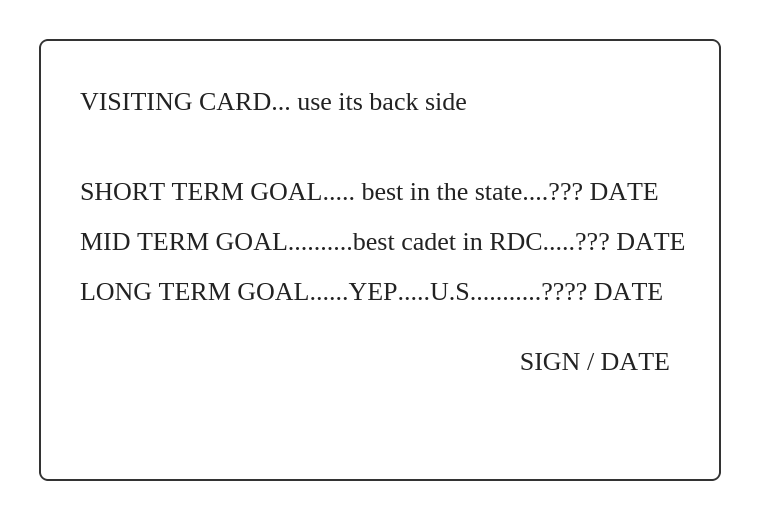
Goal Card
What is a goal card?
Take a visiting card — you can use the back side of it. Write on the flip side, for example:
- Short-term goal: Best in the state — set a date
- Mid-term goal (for example, if you’re an NCC cadet): Best cadet in RDC (Republic Day Camp) — set a date
- Long-term goal: YEP (Youth Exchange Programme — London) — set a date
Keep this visiting card in your wallet. Take it out once a day and remind yourself of the commitment you’ve made to yourself. Sign and date it.
Tell yourself: “I can, I will.” If you say “I can’t,” then, dear friends, it will become “I won’t.”
Focus
Once you’ve decided on your dream and your goals, it’s time to focus on your goal card. See the card every day — it will energize you and keep you on track.
A general awareness and desire exists in everyone, but focus does not exist in everyone. Some people will show you many directions, but not all of them will lead you toward your goal.
So don’t focus on what others say — focus on what you think is right. Focus on your own dreams, your own momentum, your own growth. Focus on what you have and what you want, and let go of the rest. Make space. Focus.
Once you know what your focus is — don’t just get focused, stay focused. Stay focused till you achieve it.
Steps to Success
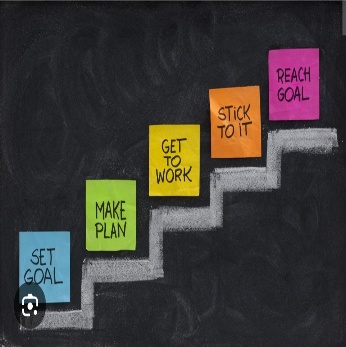

The next and most important step is: start moving. Change some habits. Change with focus in your mind, goals in your heart, and dreams on the horizon.
Change isn’t always easy — in fact, who likes change? But if you have to, you must.
Example: A change in habit — start drinking more water to improve your health. This is also known as water therapy.
Many times we observe that despite doing things as required, we still don’t get the desired results.
| Negatives | Positives |
|---|---|
| Weakness | Strength |
| Negativity | Positivity |
| Darkness | Brightness |
| Poverty | Richness |
| Pessimism | Optimism |
| Distractions | Attractions |
| Clouded vision | Clarity of vision |
| I can’t — I won’t | I can — I will |
| Failure | Success |
So, no matter what — just focus on your dreams and goals. Change your negatives to your positives, because that’s the only change that will take you the right steps toward success.
Do not fear failure, because failure is part of the journey to success. Similarly, do not fear success, because success will come automatically if you remain focused.
Therefore, follow the formula: try, try again, again, and yet again.
A few simple, relatable examples: A typist with no practice is useless; lots of daily practice makes an ace typist. A tennis player with persistence — like Leander Paes. A cricket player with deliberation — like Sachin Tendulkar.
So — what should you do? What should your strategy be?
Strategy

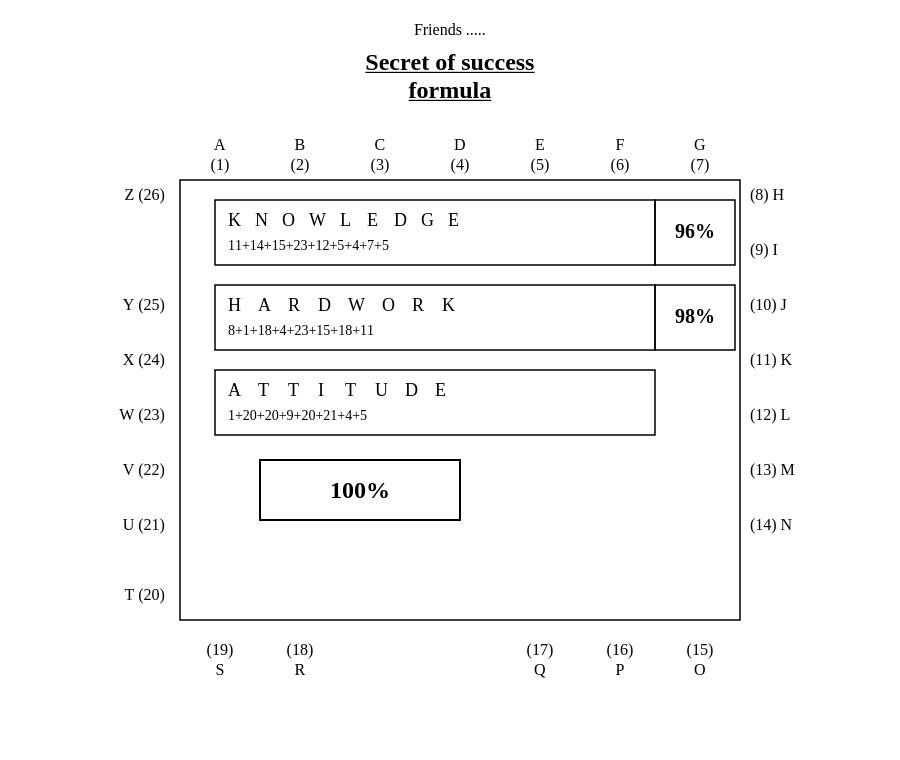
The system by which dreams, goals, targets, and focus all combine with the time factor, a positive attitude, and counselling by mentors, is known as the strategy of success.
Some simple, easily doable steps:
- Write down everything you feel strongly about.
- Ask yourself why you feel so strongly about it.
- Decide what you want in the next 5/10/15 years of your life.
- Decide what sacrifices you’re ready to make.
Once you make a decision, start moving. Make a road map. Make a dream book. Make a goal card. Put a date on the goal card. Set small goals. Start believing in yourself.
“I can — I will. I can’t — I won’t.”
Stay focused on your goals. Be ready to accept some changes. Get out of your comfort zone — no one is perfect. You all have some strengths, and you all also have some weaknesses. You know what you’re good at, and you also know what you’re not.
With the right positive attitude, with the goal card in your pocket, with your focus on your goal, your dream, your target — if you make small but measured steps in the right direction, with proper counselling from teachers, parents, elder siblings, and the right mentors — do you still feel your dreams are too far away?
Friends:
Do you still wonder why I’ve chosen to talk to you?
You — who are the youth.
You — who are the teenagers.
You — who are the pillars of our country’s future.
You — who are the pillar of strength.
You — who we, the elders, now look upon with hope.
If we’re able to understand the importance of these characteristics that dreams must have, and we follow them, we will definitely meet success.
Just never say no. Never say “I can’t.” Never say “I won’t.”
Look forward to my last episode on this topic in a few days from now.
Good luck.
Comments (1)
Namita Varmasays:
September 23, 2026 at 5:16 pmExcellent write up👍. Very inspiring for growing up children.